欧美人禽zoz0强交_成人免费看aa片_欧美精品一区二区三区在线播放_91成人国产

 
First-seen gravitational wave event named Science's Breakthrough of the Year
                 Source: Xinhua | 2017-12-22 06:27:01 | Editor: huaxia

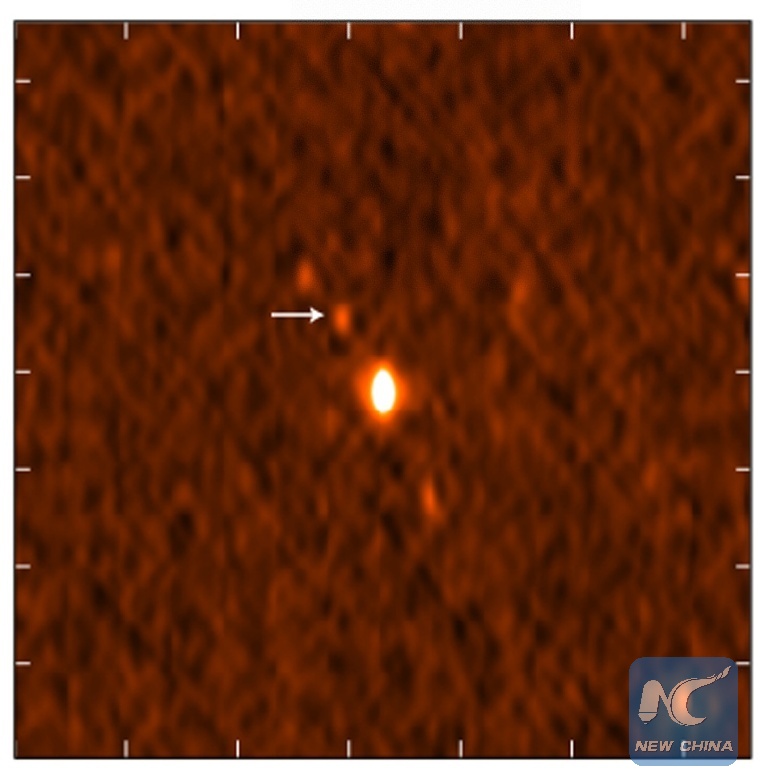
Radio image shows the GW170817 neutron star merger. Scientists announced Monday that they have for the first time detected the ripples in space and time known as gravitational waves as well as light from a spectacular collision of two neutron stars. (Xinhua/Gregg Hallinan of Caltech and Kunal Mooley of Oxford University)

WASHINGTON, Dec. 21 (Xinhua) -- The first observations of a neutron-star merger in both gravitational waves and light were named on Thursday by the influential U.S. journal Science as 2017's Breakthrough of the Year.

It's the second year in a row that editors of the U.S. scientific magazine have awarded its highest yearly honor to a discovery linked to gravitational waves, the ripples in space and time caused by the most powerful and energetic events in the universe.

"Gravitational waves are the gift that keeps on giving," explained Science News Editor Tim Appenzeller. "Being able to get the full picture of violent events like this promises to transform astrophysics, and that made this year's observation the clear Breakthrough for 2017."

Originally predicted in the early 20th century by Albert Einstein, gravitational waves were not detected until 2015, when the U.S. Laser Interferometer Gravitational-Wave Observatory (LIGO) identified a signal caused by two black holes spiraling towards each other and merging.
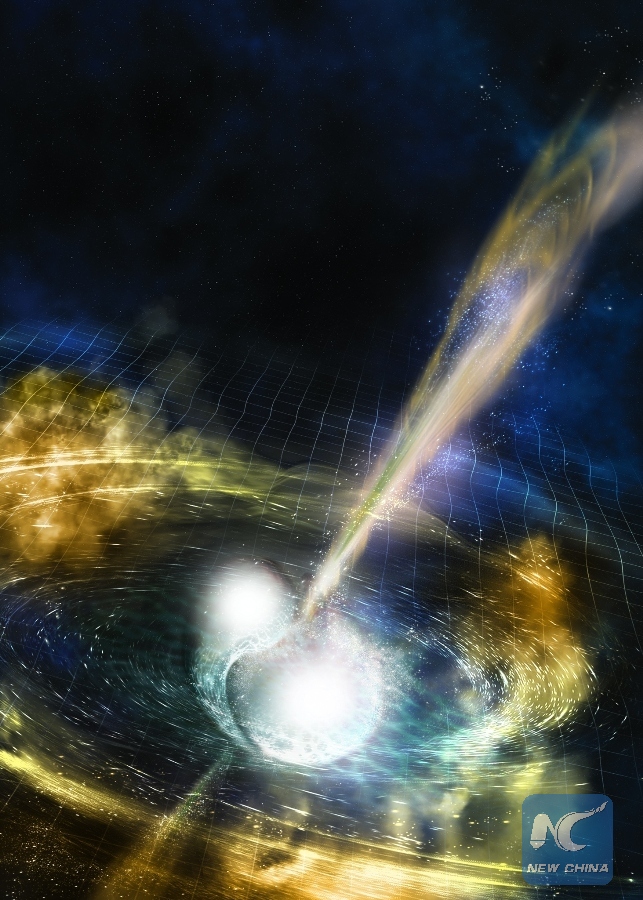
Illustration Image shows two merging neutron stars. The narrow beams represent the gamma-ray burst while the rippling spacetime grid indicates the isotropicgravitational waves that characterize the merger. Swirling clouds of material ejected from the merging stars are a possible source of the light that was seen at lower energies. Scientists announced Monday that they have for the first time detected the ripples in space and time known as gravitational waves as well as light from a spectacular collision of two neutron stars. (Xinhua/National Science Foundation/LIGO/Sonoma State University/A. Simonnet.)

It's a major discovery that won the Nobel Prize in Physics this year, in addition to landing Science's Breakthrough of the Year for 2016.

Then, on Aug. 17 this year, scientists not only, for the first time, observed the space tremor from a collision of two neutron stars 130 million light years away using the LIGO detectors, they also saw the event at all wavelengths of light, from gamma rays all the way to radio, with ground- and space-based telescopes.

"The explosion was easily the most-studied event in the history of astronomy: Some 3,674 researchers from 953 institutions collaborated on a single paper summarizing the merger and its aftermath," Science staff writer Adrian Cho wrote in an accompanying article.

Cho highlighted the importance of using gravitational waves as a new way of observing the universe.

"The blast confirmed several key astrophysical models, revealed a birthplace of many heavy elements, and tested the general theory of relativity as never before," he said.

Cho further noted that the merger only "whetted astrophysicists' appetites for more data."

"Researchers plan to increase LIGO's sensitivity at high frequencies -- for instance, by manipulating the laser light circulating in the massive detectors -- but doing so may take a few years," he added.

Image made by Caltech and NASA shows the UV/IR/Radio discovery of neutron star merger in NGC 4993. Scientists announced Monday that they have for the first time detected the ripples in space and time known asgravitational waves as well as light from a spectacular collision of two neutron stars.
(Xinhua/Robert Hurt of Caltech, Mansi Kasliwal of Caltech, Gregg Hallinan of Caltech, Phil Evans of NASA and the GROWTH collaboration)

Jeremy Berg, the editor-in-chief of Science, said in an accompany editorial that the multidimensional, detailed observations of the collision of two neutron stars represent "an exciting new phase of astronomy with tremendous potential for the future -- and a great example of 'big science.'"

"Although discoveries from LIGO have been relatively rapid, they overlie a long history of painstaking work by scientists and engineers, as well as patient support from the U.S. National Science Foundation, which has invested 1.1 billion U.S. dollars in LIGO since 1990," he wrote.

"For those directly involved, it must be extraordinarily gratifying to see decades of effort come to fruition in such a spectacular fashion and to have made such contributions to truly universal questions."
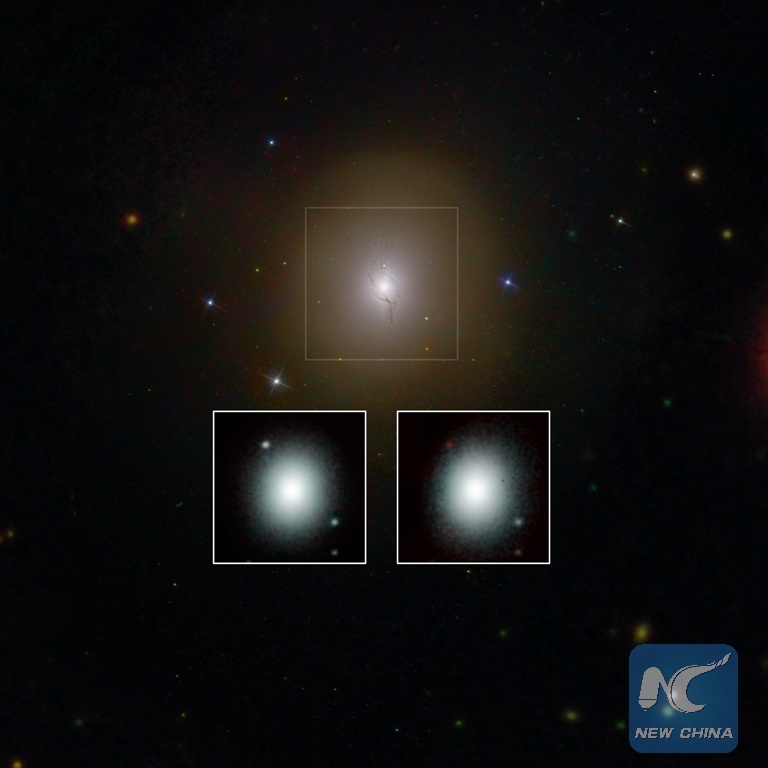
Image made by Caltech and NASA shows the evolution of neutron star merger confirming heavy element synthesis. Scientists announced Monday that they have for the first time detected the ripples in space and time known asgravitational waves as well as light from a spectacular collision of two neutron stars.
(Xinhua/Robert Hurt of Caltech, Ryan Lau of Caltech, Leo Singer of NASA, Mansi Kasliwal of Caltech and the GROWTH collaboration)

Other scientific achievements in the journal's annual top 10 list included:

-- Scientists identified a new species of orangutan on the Indonesian island of Sumatra-the first great ape species to be discovered since the bonobo in 1926.

-- A technique called cryo-electron microscopy provided fresh insights this year into many of life's key molecules, and is fast reshaping the field of structural biology.

-- Following their colleagues in physics, biologists posted unreviewed papers known as preprints online in record numbers this year, leading to "a major cultural change in communication."

-- Biologists made a big advance in editing DNA and RNA, developing techniques to transform one nucleotide base into another at a precise point in a genome.

-- The U.S. Food and Drug Administration (FDA) approved the first drug to treat solid tumors based not on where it originated, but on a particular genetic defect.

-- Scientists drilled and retrieved a 2.7-million-year-old ice core from Antarctica, which is 1.7 million years older than any previous ice sample.

-- Paleoanthropologists determined that a Homo sapiens skull from Morocco is 300,000 years old, pushing back our species origins by 100,000 years.

-- The U.S. FDA approved three gene therapy products, the first of their kind.

-- Physicists used a detector the size of a milk jug to observe neutrinos pinging off atomic nuclei in a way never seen before, confirming a 40-year-old prediction and opening the way for portable detectors of these elusive particles.

Back to Top Close
Xinhuanet

First-seen gravitational wave event named Science's Breakthrough of the Year

Source: Xinhua 2017-12-22 06:27:01

Radio image shows the GW170817 neutron star merger. Scientists announced Monday that they have for the first time detected the ripples in space and time known as gravitational waves as well as light from a spectacular collision of two neutron stars. (Xinhua/Gregg Hallinan of Caltech and Kunal Mooley of Oxford University)

WASHINGTON, Dec. 21 (Xinhua) -- The first observations of a neutron-star merger in both gravitational waves and light were named on Thursday by the influential U.S. journal Science as 2017's Breakthrough of the Year.

It's the second year in a row that editors of the U.S. scientific magazine have awarded its highest yearly honor to a discovery linked to gravitational waves, the ripples in space and time caused by the most powerful and energetic events in the universe.

"Gravitational waves are the gift that keeps on giving," explained Science News Editor Tim Appenzeller. "Being able to get the full picture of violent events like this promises to transform astrophysics, and that made this year's observation the clear Breakthrough for 2017."

Originally predicted in the early 20th century by Albert Einstein, gravitational waves were not detected until 2015, when the U.S. Laser Interferometer Gravitational-Wave Observatory (LIGO) identified a signal caused by two black holes spiraling towards each other and merging.

Illustration Image shows two merging neutron stars. The narrow beams represent the gamma-ray burst while the rippling spacetime grid indicates the isotropicgravitational waves that characterize the merger. Swirling clouds of material ejected from the merging stars are a possible source of the light that was seen at lower energies. Scientists announced Monday that they have for the first time detected the ripples in space and time known as gravitational waves as well as light from a spectacular collision of two neutron stars. (Xinhua/National Science Foundation/LIGO/Sonoma State University/A. Simonnet.)

It's a major discovery that won the Nobel Prize in Physics this year, in addition to landing Science's Breakthrough of the Year for 2016.

Then, on Aug. 17 this year, scientists not only, for the first time, observed the space tremor from a collision of two neutron stars 130 million light years away using the LIGO detectors, they also saw the event at all wavelengths of light, from gamma rays all the way to radio, with ground- and space-based telescopes.

"The explosion was easily the most-studied event in the history of astronomy: Some 3,674 researchers from 953 institutions collaborated on a single paper summarizing the merger and its aftermath," Science staff writer Adrian Cho wrote in an accompanying article.

Cho highlighted the importance of using gravitational waves as a new way of observing the universe.

"The blast confirmed several key astrophysical models, revealed a birthplace of many heavy elements, and tested the general theory of relativity as never before," he said.

Cho further noted that the merger only "whetted astrophysicists' appetites for more data."

"Researchers plan to increase LIGO's sensitivity at high frequencies -- for instance, by manipulating the laser light circulating in the massive detectors -- but doing so may take a few years," he added.

Image made by Caltech and NASA shows the UV/IR/Radio discovery of neutron star merger in NGC 4993. Scientists announced Monday that they have for the first time detected the ripples in space and time known asgravitational waves as well as light from a spectacular collision of two neutron stars.
(Xinhua/Robert Hurt of Caltech, Mansi Kasliwal of Caltech, Gregg Hallinan of Caltech, Phil Evans of NASA and the GROWTH collaboration)

Jeremy Berg, the editor-in-chief of Science, said in an accompany editorial that the multidimensional, detailed observations of the collision of two neutron stars represent "an exciting new phase of astronomy with tremendous potential for the future -- and a great example of 'big science.'"

"Although discoveries from LIGO have been relatively rapid, they overlie a long history of painstaking work by scientists and engineers, as well as patient support from the U.S. National Science Foundation, which has invested 1.1 billion U.S. dollars in LIGO since 1990," he wrote.

"For those directly involved, it must be extraordinarily gratifying to see decades of effort come to fruition in such a spectacular fashion and to have made such contributions to truly universal questions."

Image made by Caltech and NASA shows the evolution of neutron star merger confirming heavy element synthesis. Scientists announced Monday that they have for the first time detected the ripples in space and time known asgravitational waves as well as light from a spectacular collision of two neutron stars.
(Xinhua/Robert Hurt of Caltech, Ryan Lau of Caltech, Leo Singer of NASA, Mansi Kasliwal of Caltech and the GROWTH collaboration)

Other scientific achievements in the journal's annual top 10 list included:

-- Scientists identified a new species of orangutan on the Indonesian island of Sumatra-the first great ape species to be discovered since the bonobo in 1926.

-- A technique called cryo-electron microscopy provided fresh insights this year into many of life's key molecules, and is fast reshaping the field of structural biology.

-- Following their colleagues in physics, biologists posted unreviewed papers known as preprints online in record numbers this year, leading to "a major cultural change in communication."

-- Biologists made a big advance in editing DNA and RNA, developing techniques to transform one nucleotide base into another at a precise point in a genome.

-- The U.S. Food and Drug Administration (FDA) approved the first drug to treat solid tumors based not on where it originated, but on a particular genetic defect.

-- Scientists drilled and retrieved a 2.7-million-year-old ice core from Antarctica, which is 1.7 million years older than any previous ice sample.

-- Paleoanthropologists determined that a Homo sapiens skull from Morocco is 300,000 years old, pushing back our species origins by 100,000 years.

-- The U.S. FDA approved three gene therapy products, the first of their kind.

-- Physicists used a detector the size of a milk jug to observe neutrinos pinging off atomic nuclei in a way never seen before, confirming a 40-year-old prediction and opening the way for portable detectors of these elusive particles.

010020070750000000000000011105521368437511
欧美人禽zoz0强交_成人免费看aa片_欧美精品一区二区三区在线播放_91成人国产
国产精品国产三级国产aⅴ入口| 日韩福利小视频| 一区二区三区高清在线| aaaaaaaa毛片| 欧美日韩精品一区二区| 色综合一区二区日本韩国亚洲| 久久精品91久久久久久再现| 亚洲精品tv久久久久久久久久| 5g影院天天爽成人免费下载| 丁香亚洲综合激情啪啪综合| 亚洲综合日韩欧美| 欧美精品电影在线播放| 一区二区视频| 91天堂在线观看| 成人精品国产福利| 在线观看国产一级片| 日韩欧美一区二区在线视频| 都市激情久久| 亚洲一区二区自拍| 国产视频一区不卡| 亚洲AV无码国产精品| 久久精品2019中文字幕| 国产欧美在线| 青草网在线观看| 欧美综合一区二区| 中文字幕亚洲在线观看 | 日韩精品专区在线影院观看| 国产精品一区二区中文字幕| 91久久精品美女高潮| 久久色中文字幕| 亚洲男人在线天堂| 欧美高清在线播放| 秋霞av亚洲一区二区三| 五月婷婷激情久久| 亚洲欧洲激情在线| 午夜久久美女| 狠狠噜天天噜日日噜| 欧美在线观看视频一区二区 | 麻豆中文一区二区| 热久久精品免费视频| 精品欧美一区二区久久| 国产亚洲欧美日韩在线观看一区二区| 精品一区久久久久久| 亚洲男人都懂的| 精品国产欧美日韩不卡在线观看| 国产经典一区二区| 久久久99免费| 国内毛片毛片毛片毛片毛片| 国产精品成人免费电影| 久久一夜天堂av一区二区三区| a视频免费观看| 日本三级韩国三级久久| 久久五月婷婷丁香社区| 粉嫩精品久久99综合一区| 日本电影亚洲天堂| 日本一区免费视频| 婷婷在线精品视频| 国产精品国产三级欧美二区| 亚洲综合视频网| 久久天堂久久| 欧美亚州在线观看| 欧美日韩亚洲另类| 91精品一久久香蕉国产线看观看| 91精品视频免费看| 亚洲综合色自拍一区| 欧美黄色录像| 国产91av视频在线观看| 日韩视频不卡中文| 99亚洲精品| 久国产精品视频| 欧美大片在线看| 91在线观看地址| 亚洲色偷偷综合亚洲av伊人| 国产色综合一区二区三区| 五月激情六月综合| 日韩伦理视频| 中文字幕乱码人妻综合二区三区| 主播福利视频一区| 国产成人av网站| 国产wwwwxxxx| 快播亚洲色图| 在线播放视频一区| 午夜在线播放视频欧美| 岛国精品一区二区三区| 日本久久久久亚洲中字幕| 中文字幕一区二区三区蜜月| 欧美激情网址| 日本福利视频一区| 日韩在线播放av| 99久久伊人久久99| 精品一区二区三区视频在线播放| 欧美婷婷久久| 亚洲成色777777女色窝| 国产一区二区三区精品欧美日韩一区二区三区 | 亚洲午夜在线观看| 亚洲精品国产精品国产自| 免费人成网站在线观看欧美高清| 亚洲精品理论片| 91在线短视频| 日韩一本二本av| 麻豆国产精品视频| 男人晚上看的视频| 国产精品va在线| 国产精品国产自产拍在线| 欧美激情精品久久久久久免费| 欧美日韩一区二区三区在线视频 | 欧美理论在线播放| 精品www久久久久奶水| 欧美激情精品久久久久久久变态 | 黄色成人在线免费观看| www国产精品视频| 国产免费成人在线视频| 欧美欧美黄在线二区| 欧美爱爱视频免费看| 高清欧美电影在线| 亚洲高清中文字幕| 一区二区毛片| 最新日韩免费视频| 丰满女人性猛交| 欧美成年人在线观看| 亚洲女与黑人做爰| 亚洲性感美女99在线| 内射中出日韩无国产剧情| 麻豆亚洲一区| 一区二区三区在线播放欧美| 国产精品国产成人国产三级| 91欧美日韩| 日本三级日本三级日本三级极| 国产91aaa| 日韩精品免费综合视频在线播放| 91视频在线观看免费| 一道本一区二区三区| 91精品国产三级| 国产偷久久久精品专区| 亚洲美女av在线| 国产精品国产自产拍高清av王其 | 欧美呦呦网站| 国产精品久久久久久久无码| 美女一区视频| 在线看福利67194| 欧美经典一区二区三区| 北条麻妃国产九九九精品小说| 国产欧美激情视频| 91日韩在线播放| 亚洲精品资源美女情侣酒店| 久久精品视频一区| 99精品一区| 菠萝菠萝蜜网站| 亚洲国产婷婷香蕉久久久久久99 | 高清精品久久| 国产原创popny丨九色| 91成人国产在线观看| 一本色道亚洲精品aⅴ| 日韩国产欧美一区二区三区| 精品欧美视频| 国产成人精品无码播放| 国产精品日韩在线观看| 在线播放一区二区三区| 成人av免费网站| 国产精品一区二区三区av麻| aa一级黄色片| yy111111少妇影院日韩夜片| 亚洲精品ady| 99av国产精品欲麻豆| 一级在线观看视频| aa在线免费观看| 国产这里只有精品| 日韩精品免费视频| 亚洲欧美日韩系列| 激情欧美日韩一区二区| 久久久久97| 亚洲精品在线网址| 欧美最大成人综合网| 超在线视频97| 亚洲一级二级三级在线免费观看| 黄页网站大全一区二区| 欧美a级网站| 精品人妻伦一二三区久| 一区二区不卡在线视频 午夜欧美不卡' | youjizz.com国产| 一区一区视频| 欧美亚洲日本网站| 精品久久久久久久一区二区蜜臀| 亚洲国产精品成人久久综合一区| 免费精品视频| 91亚洲精品视频在线观看| 精品国产一二三四区| 91超碰rencao97精品| 久久久久久91香蕉国产| 51精品久久久久久久蜜臀| 久久精品一区二区三区av| 亚洲精品四区| 动漫av一区| 成人精品一二三区| 我要看一级黄色大片| 蜜桃成人在线| 欧亚精品中文字幕| 亚洲欧洲在线视频| 久久久99精品久久| 久久99精品久久久久久久久久久久| 私拍精品福利视频在线一区| 麻豆精品免费视频| 免费日韩视频在线观看| 91香蕉国产在线观看| 性欧美长视频免费观看不卡| 亚洲国产精品小视频| 精品国产1区2区| 另类小说视频一区二区| 爽成人777777婷婷| 美女午夜精品| 手机看片国产日韩| 在线观看免费视频污| 青青草综合视频| 国产主播一区二区三区四区| 国产精品成人观看视频国产奇米| 中文字幕综合一区| 日韩欧美一区在线| 黄色一区二区三区| 国产无一区二区| 99久久精品99国产精品| 青青青伊人色综合久久| 亚洲国产日韩欧美在线| 在线不卡av电影| 一区二区三区 欧美| 欧美一级片在线播放| 久久国产精品免费视频 | 亚洲911精品成人18网站| 日本一道在线观看| 久久99久久精品国产| 国产精品 欧美在线| 在线观看久久久久久| 欧美成人bangbros| 91国模大尺度私拍在线视频| 国产精品国产三级国产aⅴ无密码| 激情六月婷婷久久| 日韩影院二区| 欧美日韩中文一区二区| 91成人福利| 亚洲三级电影| ass极品国模人体欣赏| 在线看免费毛片| 黄色国产精品视频| 午夜精品短视频| 黄色99视频| 亚洲aa中文字幕| 国产精品视频自在线| 2019国产精品自在线拍国产不卡| 久久久av免费| 中文字幕av一区中文字幕天堂| 亚洲第一精品夜夜躁人人爽| 欧美精品成人一区二区三区四区| 一区二区在线电影| 亚洲第一福利一区| 亚洲国产日韩一区二区| 亚洲欧美日韩国产手机在线| 国产欧美精品一区二区色综合 | 91九色蝌蚪成人| 一区二区高清免费观看影视大全| 91sa在线看| 精品人在线二区三区| 91精品综合久久久久久| 欧美影院一区二区| 91精品国产91久久久久久最新毛片| 在线免费观看一区| 色婷婷国产精品久久包臀| 天天操天天综合网| 亚洲第一激情av| 色老综合老女人久久久| 午夜久久电影网| 欧美日韩裸体免费视频| 亚洲成a人片在线观看中文| 国产91精品久久久久久久网曝门| 高清不卡在线观看av| 成年人网站91| 97久久精品人人澡人人爽| av不卡免费电影| 91美女福利视频| 国产色91在线| 中文字幕乱码久久午夜不卡| 欧美激情在线一区二区三区| 97精品久久久午夜一区二区三区| 欧美国产精品一区二区三区| 欧美国产禁国产网站cc| 国产精品白丝在线| 亚洲色欲色欲www在线观看| 黑丝美女久久久| 欧美亚洲一区二区在线观看| 欧美日韩中文字幕精品| 日韩视频一区二区三区在线播放| 欧美日韩在线一区二区| 亚洲理论在线a中文字幕| 在线精品91av| 欧美精品一区二区免费| 欧美性视频精品| 国产精品国产精品国产专区蜜臀ah | 欧美中文字幕在线| 999国产视频| 婷婷久久伊人| 久久精品无码中文字幕| 毛片一区二区三区四区| 国产精品jizz| 久艹在线观看视频| 视频精品一区| 欧美伦理在线视频| 久久人人97超碰国产公开结果| 久久av资源网| 国产午夜精品美女毛片视频| 亚洲精品欧美专区| 欧美日韩精品电影| 日韩国产高清污视频在线观看| 色噜噜狠狠狠综合曰曰曰| 国内精品久久影院| 成人一区二区电影| 欧美日韩综合网| 欧日韩免费视频| 国产一区二区三区av在线| 欧美视频在线播放一区| 免费国偷自产拍精品视频| 国产欧美小视频| 国产精品中文字幕制服诱惑| 夜夜精品视频| 国产精品综合视频| 亚洲欧洲精品天堂一级| 日本高清成人免费播放| 精品国产一区二区三区四区在线观看| 97超级碰碰碰| 久久国产一区| a级黄色一级片| 男人舔女人下部高潮全视频| 国产毛片精品| 99精品国产一区二区青青牛奶| 日韩电影在线免费观看| 自拍偷拍亚洲激情| 91精品国产丝袜白色高跟鞋| 最近免费中文字幕视频2019 | 亚洲一区二区福利| 日本午夜精品理论片a级appf发布| 国产另类第一区| 亚洲色图久久久| 纪美影视在线观看电视版使用方法| 精品精品国产毛片在线看| 亚洲国产二区| 中文字幕中文乱码欧美一区二区| 欧美日本一区二区| 久久激情五月丁香伊人| 亚洲一区二区三区四区视频| 成人短视频在线观看免费| 欧美人与性囗牲恔配| 一道在线中文一区二区三区| 日本va欧美va欧美va精品| 久久亚洲一区二区三区明星换脸| 欧美色电影在线| 欧美乱大交做爰xxxⅹ性3| 国产精品免费一区二区三区| 9久久9毛片又大又硬又粗| 91精品一区二区三区蜜桃| 天天精品视频| 成人精品电影在线观看| 久久久不卡影院| 亚洲国产小视频| 国产日韩欧美中文| www插插插无码视频网站| 中文字幕 日韩 欧美| 香蕉成人在线| 99热这里只有成人精品国产| 欧美激情中文不卡| 精品在线欧美视频| 91在线看www| 久久久精品三级| 极品蜜桃臀肥臀-x88av| 亚洲高清二区| 中文字幕亚洲电影| 日韩av最新在线观看| 国产乱码精品一区二区三区不卡| 精品久久久久久中文字幕2017| 成人动漫视频在线观看| 在线亚洲激情| 国产精品免费av| 日韩va亚洲va欧洲va国产| 亚洲自拍高清视频网站| 国产精品99精品无码视亚| 神马久久影院| 从欧美一区二区三区| 日韩欧美在线视频| 国产精品69久久久久| 男人添女人下面高潮视频| 熟女av一区二区| 国产精品资源在线看| 精品国产青草久久久久福利| 欧美大尺度激情区在线播放 | 免费精品国产的网站免费观看| 国产一区二区三区四区在线观看| 欧美精品一区二区三区视频| 99中文字幕| 日本少妇xxxx| 国产精品最新自拍| 欧美本精品男人aⅴ天堂| 精品一区二区三区自拍图片区| 国产91丝袜美女在线播放| 亚洲激情一区|